Table of Contents
- Why Do People Think Castor Seeds Prevent Pregnancy?
- Do Castor Seeds Really Contain a Poison?
- Myth vs Fact: What's True About Castor Seeds and Family Planning?
- What Are the Real Risks?
- What Are Safe and Effective Family Planning Options?
- What Should You Do If Someone Has Already Swallowed Castor Seeds?
- The Bottom Line
A plain-language look at an old folk claim, why it is dangerous, and what to do instead.
You've seen the message on WhatsApp or a health forum: swallow a castor seed and you won't get pregnant. It sounds natural, cheap and easy.
Here's the honest answer first: please don't. Castor seeds are not a safe or proven contraceptive, and swallowing them can be dangerous.
Why Do People Think Castor Seeds Prevent Pregnancy?
The idea comes from old traditional practices in some communities, and it keeps being passed around online. A few small lab and animal studies have looked at castor seed extracts too.
But "studied in a lab" is very far from "safe and reliable for people". Fact-checkers who looked into the viral claim spoke to a reproductive health professor, who said no established health agency backs castor seeds as a contraceptive.
I'd add this: if something only "works" in whispered advice and forwarded messages, treat it with caution.
Real contraceptives go through years of testing in many people, with clear instructions, known side effects and proper follow-up. A forwarded message has none of that.
Do Castor Seeds Really Contain a Poison?
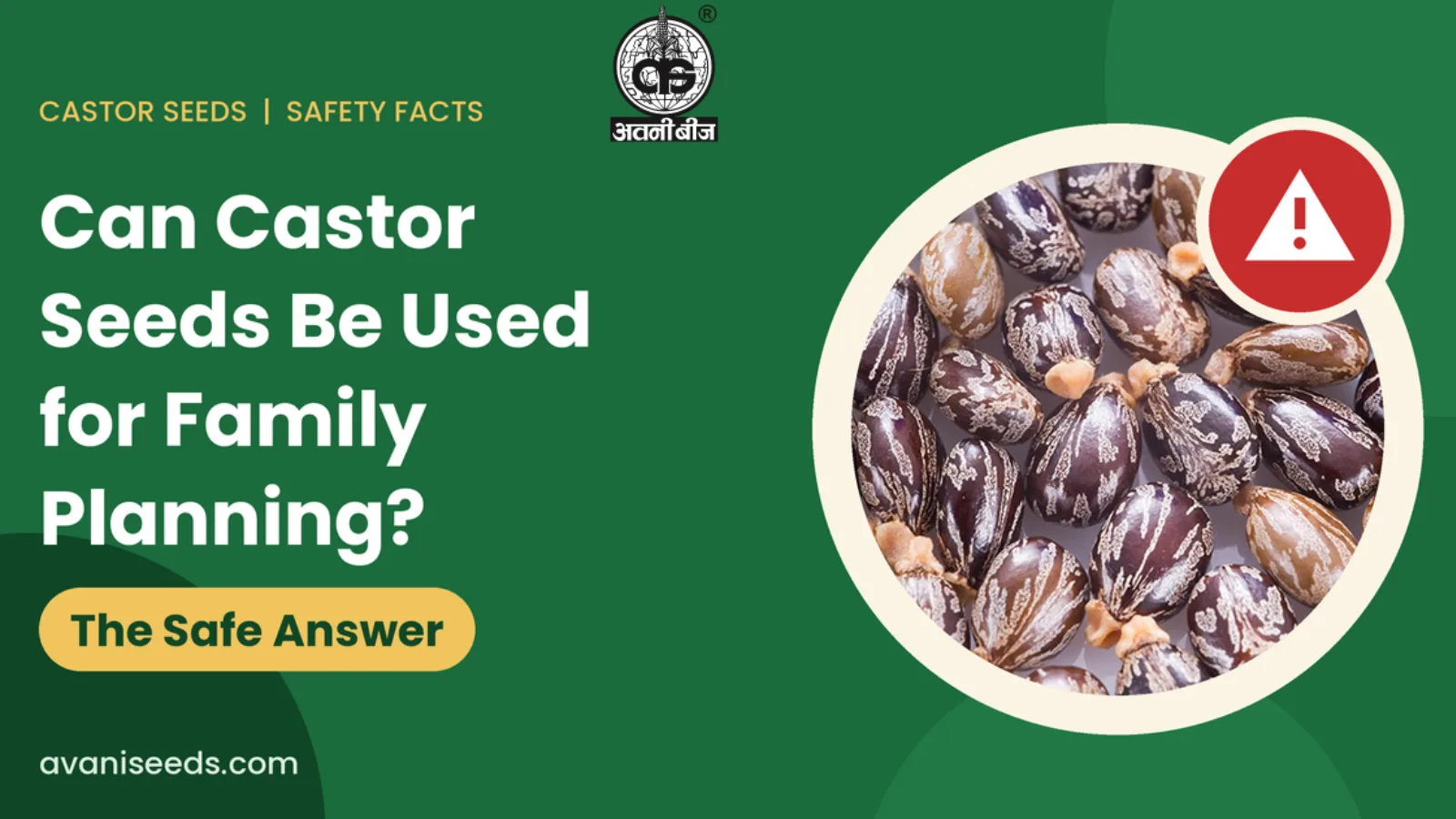
Yes. Castor seeds (beans) naturally contain ricin, a toxic protein. The US Centers for Disease Control and Prevention explains that if castor beans are chewed and swallowed, the released ricin can cause injury.
According to the CDC's ricin fact sheet, symptoms after swallowing usually begin within hours. It also says there's no specific antidote. Doctors can only give supportive care to limit the damage.
I work with castor every day as a crop, so let me say it plainly: castor seeds are a farm and industry crop, not a food or medicine. Agricultural seed sold for sowing is meant to be planted, never eaten.
Myth vs Fact: What's True About Castor Seeds and Family Planning?
Myth: "It's natural, so it must be safe." Fact: Many natural things are poisonous. Castor seeds are one of them.
Myth: "My grandmother's friend used it and it worked." Fact: One story can't tell you whether something prevents pregnancy. Someone who didn't get pregnant might simply have been lucky.
Myth: "Castor oil is the same thing, so it's fine." Fact: Castor oil is a processed product used mainly as a laxative. It is not a contraceptive, and the whole seed is a very different thing.
Myth: "One small dose is harmless." Fact: There's no safe, tested dose for use as birth control. Nobody can tell you a "right amount", and I won't try.
What Are the Real Risks?
The first risk is poisoning, which can be serious and sometimes fatal. The second is quieter: an unplanned pregnancy.
If a seed doesn't actually protect you, you may believe you're safe when you aren't. And if someone is already pregnant, swallowing toxic seeds could put them and the baby at risk.
There's also a cost people forget. Relying on a myth can delay getting a method that truly works.
So if a friend or relative suggests this remedy, you can say no kindly. Something like "Let's ask a doctor first" is a perfectly good reply, and it protects everyone involved.
What Are Safe and Effective Family Planning Options?
The good news is that there are many options, and the World Health Organization notes that family planning and contraception help people decide whether and when to have children. Methods include:
- Condoms, which also help protect against infections
- Birth control pills and injectables
- Implants and intrauterine devices (IUDs)
- Fertility awareness methods
- Permanent methods, for those who are sure they're done having children
What suits you depends on your health, age and plans. A doctor, a gynecologist or a local government health centre can explain your choices and answer your questions in private. Many areas also have community health workers who can guide you.
What Should You Do If Someone Has Already Swallowed Castor Seeds?
Don't wait for symptoms. Get to the nearest hospital or emergency service right away and tell them exactly what was eaten and roughly when.
Take any remaining seeds or packaging with you if you can. Don't try home remedies or wait to "see how it goes". Medical staff need to see the person early, because the effects can take hours to show.
The Bottom Line
Castor seeds are not a safe or proven way to plan a family. They contain ricin, a poison, and no health body recommends them for contraception.
If you want to prevent or space pregnancies, speak to a doctor or health worker. There are safe, tested options, and you deserve to have them explained properly.
If you are a farmer, buyer or distributor looking for castor for cultivation, you can browse the castor seed varieties at Avani Seeds or read our castor seed cultivation practices guide. For crop and supply questions, our team is happy to help through the contact page.
About the author: Written by the Avani Seeds content team. Avani Seeds Ltd. is an Indian producer, marketer and exporter of agricultural seeds, including castor. Learn more at avaniseeds.com.