
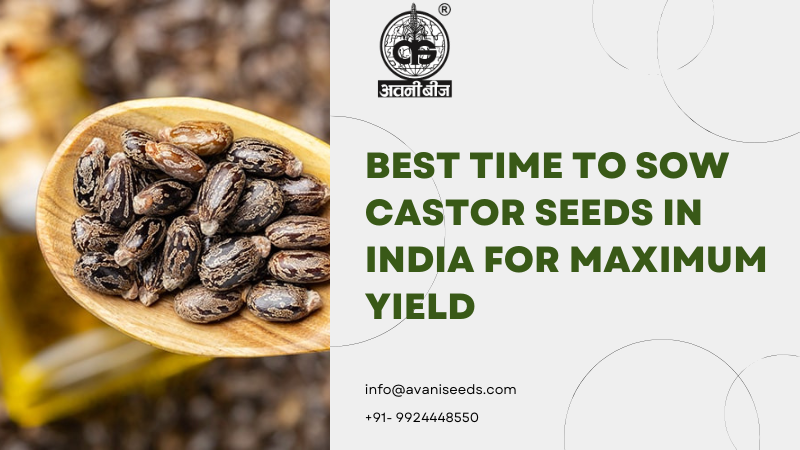
Castor farming has become an important agricultural activity in many parts of India because of the increasing demand for castor oil in industrial, pharmaceutical, cosmetic, and agricultural sectors. Farmers are now focusing more on improving crop productivity and choosing the right sowing period to maximize profits.
One of the biggest factors influencing castor yield is sowing timing. Even high-quality seeds may not perform well if planted during unfavorable weather conditions. Understanding the best season for castor cultivation helps farmers improve germination, plant growth, and overall productivity.
In this blog, we will explain the ideal sowing time, weather requirements, and essential farming practices that can help farmers achieve better castor production.
Why Sowing Time Is Important in Castor Farming
Proper sowing timing directly affects:
- Seed germination
- Root development
- Disease resistance
- Flowering quality
- Seed formation
When castor seeds are sown during the correct season, plants receive favorable moisture, temperature, and sunlight conditions. This creates healthier crop growth and better yields.
Farmers who delay sowing often face:
- Poor germination
- Weak plant growth
- Higher pest attacks
- Lower seed productivity
Following the right sowing schedule is one of the most valuable steps in any successful castor farming guide for farmers.
Best Season for Castor Cultivation in India
The best season for castor cultivation in India is mainly during the Kharif season. Most farmers begin sowing after the arrival of monsoon rains because moisture availability supports early plant establishment.
Ideal Sowing Months
(1) Gujarat and Rajasthan – June to July
(2) Maharashtra – June to mid-July
(3) South India – Depending on rainfall conditions, sowing may continue until August
(4) Irrigated Areas – Some regions also practice late sowing with irrigation support
Timely sowing allows plants to establish strong roots before heavy rainfall fluctuations or dry conditions appear later in the season. For better productivity, farmers should always purchase quality seeds from the Largest Producer of Castor Seeds in India to ensure strong germination and healthy crop development.
Ideal Climate Conditions for Castor Farming
Castor is a hardy crop that can tolerate semi-arid conditions, but certain environmental conditions are necessary for maximum yield.
Best Conditions for Castor Crop Growth
- Warm temperature between 20°C to 30°C
- Moderate rainfall
- Well-drained soil
- Adequate sunlight exposure
Heavy waterlogging should be avoided because excessive moisture can damage roots and reduce plant health.
Understanding weather conditions is an important part of every effective castor farming guide for farmers.
Castor Seed Germination Tips for Better Crop Establishment
Healthy germination is the foundation of a successful castor crop. Poor germination often leads to uneven plant growth and lower production.
Important Castor Seed Germination Tips
(1) Use Certified Seeds
Always select high-quality seeds from trusted suppliers for better emergence and uniform growth.
(2) Maintain Proper Soil Moisture
The soil should be moist but not excessively wet during sowing.
(3) Correct Seed Depth
Seeds should be planted at an appropriate depth to encourage strong root development.
(4) Warm Soil Temperature
Castor seeds germinate better in warm soil conditions during early monsoon periods.
(5) Avoid Waterlogged Fields
Excess water can reduce oxygen availability and affect germination.
These simple castor seed germination tips can significantly improve crop establishment and final productivity.
Soil Preparation for Higher Yield
Good land preparation improves moisture retention and root growth.
Recommended Soil Types
Castor grows well in:
- Sandy loam soil
- Medium black soil
- Well-drained fertile land
Field Preparation Tips
(1) Deep Ploughing
Improves soil aeration and root penetration.
(2) Remove Previous Crop Residue
Helps reduce pest and disease risks.
(3) Organic Matter Application
Adding compost or farmyard manure improves soil fertility naturally.
(4) Level the Field Properly
Ensures uniform irrigation and moisture distribution.
Proper soil preparation increases crop strength during the best season for castor cultivation.
Fertilizer and Nutrient Management
Balanced nutrition is important for healthy castor crop growth.
Essential Nutrients
(1) Nitrogen
Supports vegetative growth.
(2) Phosphorus
Encourages root development.
(3) Potassium
Improves flowering and seed formation.
Farmers should apply fertilizers according to soil conditions and crop stage requirements.
Irrigation Management in Castor Farming
Although castor is drought tolerant, strategic irrigation can improve productivity.
Critical Irrigation Stages
- Germination stage
- Flowering stage
- Seed formation stage
Avoid over-irrigation because waterlogging can weaken roots and increase fungal problems.
Common Mistakes Farmers Should Avoid
Many farmers reduce their yield due to simple but avoidable mistakes.
Frequent Errors in Castor Farming
(1) Delayed Sowing
Late planting may reduce seed formation and productivity.
(2) Low-Quality Seed Selection
Poor seeds often result in uneven growth.
(3) Excess Nitrogen Use
Too much nitrogen may increase vegetative growth while reducing seed production.
(4) Poor Drainage Management
Standing water can damage the crop quickly.
Avoiding these mistakes can improve profitability and crop health.
Why Castor Farming Is Profitable in India
Castor cultivation continues to grow because of increasing industrial demand and export opportunities.
Benefits of Castor Farming
- Strong market demand for castor oil
- Suitable for dryland farming
- Lower water requirement
- Good adaptability to semi-arid regions
- Better long-term commercial potential
Farmers are increasingly shifting toward scientific farming methods to improve returns from castor cultivation.
Conclusion
Understanding the best season for castor cultivation is essential for achieving maximum productivity and better farm income. Proper sowing timing, quality seeds, balanced nutrition, and good field management together create the foundation for a healthy and profitable castor crop.
Following practical advice from a trusted castor farming guide for farmers and applying effective castor seed germination tips can significantly improve crop establishment and yield performance. For farmers planning successful castor cultivation, choosing premium seeds from the Largest Producer of Castor Seeds in India and working with experienced Agriculture Seed Suppliers in India can help ensure better farming outcomes and long-term profitability.