
Table of Contents
- What Is the Rabi Season?
- Top 7 Best Rabi Crops to Grow in 2026-27 for Higher Returns
- 1. Wheat - A Popular Choice for Rabi Farming
- 2. Mustard - An Important Oilseed Crop
- 3. Cumin - A Valuable Spice Crop for Gujarat
- 4. Fennel - A Promising Spice Crop
- 5. Isabgol - An Important Commercial Crop
- 6. Coriander - A Popular Spice Crop
- 7. Winter Vegetables - An Opportunity for Diversified Farming
- How to Choose the Right Rabi Crop for Higher Returns?
- 1. Understand Your Soil Type
- 2. Consider Water Availability
- 3. Check Market Demand
- 4. Select Quality Seeds
- 5. Follow the Right Sowing Time
- Important Farming Tips for Rabi Season 2026-27
- Why Choose Avani Seeds for Your Rabi Season Farming?
- Conclusion
- Frequently Asked Questions
The Rabi season is one of the most important farming seasons in India. With the arrival of winter, farmers begin preparing their fields to grow crops that thrive in cooler temperatures and relatively dry weather. Choosing the right crop, selecting quality seeds, and following proper cultivation practices can help farmers improve productivity and achieve better returns.
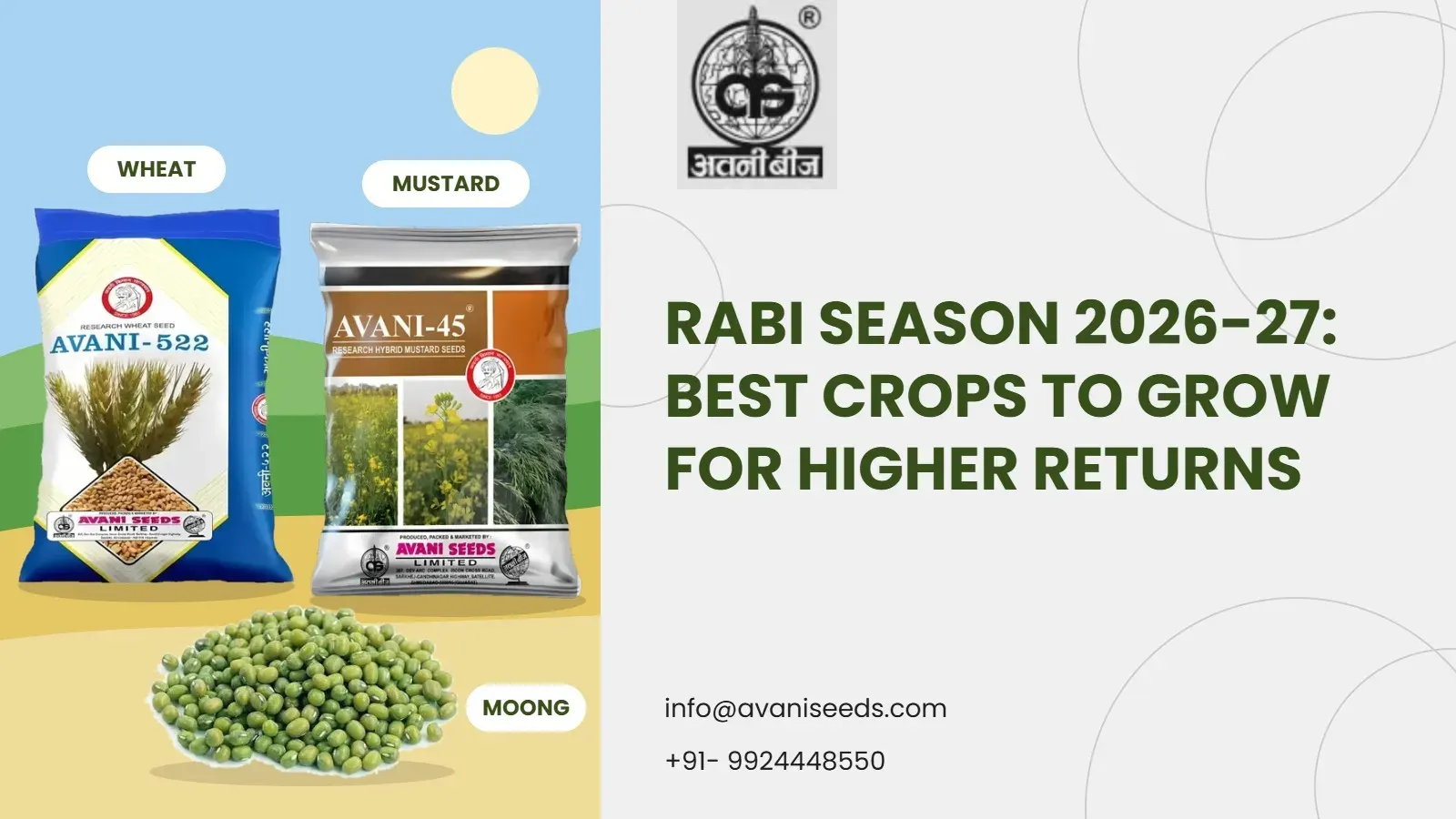
For the Rabi Season 2026-27, farmers in Gujarat and other parts of India can consider several crops, including wheat, mustard, cumin, fennel, isabgol, coriander, and winter vegetables.
In this guide, we will explore the best Rabi crops to grow, their benefits, and important farming practices that can help farmers make informed decisions.
What Is the Rabi Season?
The Rabi season refers to the winter cropping season in India. Rabi crops are generally sown between October and December and harvested between February and April, depending on the crop and region.
These crops grow during cooler weather and usually depend on stored soil moisture and irrigation.
Some of the major Rabi crops grown in India include:
- Wheat
- Mustard
- Chickpea (Gram)
- Cumin
- Fennel
- Isabgol
- Coriander
- Peas
- Spinach
Gujarat is particularly known for cultivating wheat, cumin, fennel, mustard, and isabgol during the Rabi season.
Top 7 Best Rabi Crops to Grow in 2026-27 for Higher Returns
Selecting the right crop is essential for achieving better farm productivity. Here are seven crops farmers can consider for the Rabi season.
1. Wheat - A Popular Choice for Rabi Farming
Wheat is one of India's most widely cultivated Rabi crops. It is an important food grain and has consistent demand in domestic markets.
Why grow wheat?
- Strong demand in the Indian food market.
- Suitable for many agricultural regions.
- Established cultivation and marketing practices.
- Good potential under suitable irrigation and soil conditions.
Cultivation tips:
- Select a locally recommended wheat variety.
- Prepare a well-levelled and properly drained field.
- Follow the recommended sowing period for your region.
- Maintain adequate soil moisture during critical growth stages.
- Apply fertilizers according to soil testing and agricultural recommendations.
Farmers can explore the wheat seed varieties available from Avani Seeds for their cultivation requirements.
2. Mustard - An Important Oilseed Crop
Mustard is an important Rabi oilseed crop cultivated across several Indian states. Its seeds are used for extracting edible oil and have applications in the food industry.
Why grow mustard?
- Demand for mustard oil and its by-products.
- Can be suitable for areas with relatively limited irrigation.
- Offers an opportunity for crop diversification.
- Important oilseed crop in Indian agriculture.
Cultivation tips:
- Choose quality seeds suitable for local climatic conditions.
- Sow during the recommended planting window.
- Maintain appropriate plant spacing.
- Avoid excessive irrigation.
- Monitor crops regularly for pests and diseases.
Avani Seeds offers mustard and rapeseed seed varieties for farmers interested in oilseed cultivation.
3. Cumin - A Valuable Spice Crop for Gujarat
Cumin, commonly known as Jeera, is an important spice crop in Gujarat and Rajasthan. Gujarat is one of India's major cumin-producing states.
Cumin is a popular choice among farmers in suitable dry and semi-arid agricultural regions.
Why grow cumin?
- Strong domestic and export market relevance.
- Important commercial spice crop.
- Suitable for selected regions with appropriate winter conditions.
- Can provide attractive returns when crop quality and market prices are favourable.
Cultivation tips:
- Choose suitable, quality cumin seeds.
- Prepare a fine, well-drained seedbed.
- Follow the locally recommended sowing period.
- Avoid waterlogging and excessive irrigation.
- Monitor the crop for fungal diseases and other common problems.
Avani Seeds offers cumin seed varieties, including AVANI-111 and AVANI-121.
4. Fennel - A Promising Spice Crop
Fennel, known as Saunf, is another important spice crop grown during the Rabi season. It is cultivated commercially in Gujarat and other parts of India.
Fennel seeds are widely used in food preparation, spice blends, and traditional applications.
Why grow fennel?
- Established demand in domestic spice markets.
- Commercial cultivation opportunities.
- Suitable for selected winter-growing regions.
- Multiple market applications.
Cultivation tips:
- Select seeds suitable for your region.
- Prepare fertile, well-drained soil.
- Maintain recommended plant spacing.
- Provide irrigation according to crop requirements.
- Monitor flowering and seed development carefully.
Farmers can explore the AVANI-DONA fennel seed variety from Avani Seeds.
5. Isabgol - An Important Commercial Crop
Isabgol, also known as Psyllium, is a valuable medicinal and commercial crop grown in Gujarat and Rajasthan.
Its seeds and husk are widely used in the pharmaceutical, food, and health industries.
Why grow Isabgol?
- Demand from domestic and international markets.
- Important commercial crop for suitable agricultural regions.
- Opportunities for farmers interested in medicinal crops.
- Established cultivation in parts of Gujarat.
Cultivation tips:
- Select suitable quality seeds.
- Ensure proper soil preparation.
- Avoid waterlogging.
- Maintain appropriate moisture during crop growth.
- Harvest carefully to reduce seed losses.
Avani Seeds offers Isabgol varieties, including AVANI-101 and Avani-Varsha.
6. Coriander - A Popular Spice Crop
Coriander, commonly called Dhaniya, is an important spice crop grown in the Rabi season.
Both coriander leaves and seeds have considerable demand in Indian households and food industries.
Why grow coriander?
- Demand for fresh leaves and dried seeds.
- Multiple commercial uses.
- Suitable for different cultivation and marketing purposes.
- Can be considered for diversified farming.
Cultivation tips:
- Choose suitable seeds according to the intended market.
- Prepare well-drained soil.
- Maintain proper spacing.
- Avoid excessive watering.
- Monitor the crop for common pests and diseases.
Avani Seeds offers coriander seed varieties under its vegetable seed category.
7. Winter Vegetables - An Opportunity for Diversified Farming
Winter vegetables are another option for farmers looking to diversify their agricultural activities.
Some popular winter vegetables include:
- Peas
- Spinach
- Coriander
- Other locally suitable seasonal vegetables.
Why grow winter vegetables?
- Demand from local vegetable markets.
- Opportunities for staggered harvesting.
- Potential for regular market supply.
- Multiple cultivation options for small and medium-sized farms.
Cultivation tips:
- Select suitable vegetable seed varieties.
- Prepare fertile soil with proper drainage.
- Follow recommended sowing distances.
- Maintain regular irrigation according to crop requirements.
- Harvest at the appropriate maturity stage.
Avani Seeds offers vegetable seed varieties such as AVANI-Greenstar (Peas), AVANI-KUSUM (Spinach), and coriander varieties.
How to Choose the Right Rabi Crop for Higher Returns?
Growing a profitable crop requires more than selecting a popular variety. Farmers should consider several important factors before making their final decision.
1. Understand Your Soil Type
Different crops perform better under different soil conditions. Conduct soil testing to understand soil fertility, pH, and nutrient requirements.
2. Consider Water Availability
Water availability plays an important role in Rabi farming. Wheat generally requires more irrigation than crops such as chickpea and mustard.
Choose crops according to your irrigation facilities and local conditions.
3. Check Market Demand
Before sowing, understand the local market demand, expected selling prices, procurement opportunities, and nearby buyers.
A crop with a good market price may not necessarily provide higher profit if cultivation and transportation costs are high.
4. Select Quality Seeds
Seed quality is one of the most important factors influencing crop establishment and productivity.
Always consider:
- Seed purity.
- Germination percentage.
- Suitability to local climate.
- Recommended crop variety.
- Resistance or tolerance to relevant diseases, where applicable.
5. Follow the Right Sowing Time
Timely sowing helps crops establish properly and complete their growth cycle under suitable climatic conditions.
Farmers should follow recommendations from their local agricultural university or agriculture department.
Important Farming Tips for Rabi Season 2026-27
For better crop establishment and productivity, farmers should follow these essential practices:
- Prepare the soil properly: Ensure suitable soil structure, drainage, and field preparation before sowing.
- Use certified and quality seeds: Purchase seeds from reliable suppliers and check the seed label before planting.
- Follow recommended seed rates: Avoid overcrowding or insufficient plant populations.
- Manage irrigation carefully: Provide water according to crop requirements and growth stages.
- Control weeds: Timely weed management helps reduce competition for nutrients, water, and sunlight.
- Monitor pests and diseases: Regular field inspections can help identify problems at an early stage.
- Use balanced fertilizers: Apply nutrients according to soil testing and crop-specific recommendations.
- Plan harvesting properly: Harvest at the right maturity stage to maintain crop quality and minimize losses.
Why Choose Avani Seeds for Your Rabi Season Farming?
Choosing a reliable seed supplier is an important step towards successful farming.
Avani Seeds Ltd. has been serving the agricultural sector since 1983, with a farmer-focused approach and a diverse portfolio of agricultural seeds.
With more than four decades of experience, Avani Seeds offers seed varieties across several categories, including cereals, oilseeds, pulses, spices, vegetables, and fodder.
What makes Avani Seeds a choice for farmers?
- More than 40 years of experience in the seed industry.
- Extensive range of agricultural seed varieties.
- Focus on seed quality and germination testing.
- Dedicated research and development efforts.
- Farmer-focused service and support.
Whether you are planning wheat, mustard, cumin, fennel, isabgol, or winter vegetable cultivation, explore the available seed varieties from Avani Seeds.
Visit the Avani Seeds Products Page to explore the available varieties.
Conclusion
The Rabi Season 2026-27 offers several opportunities for Indian farmers to diversify their crops and improve agricultural productivity.
Wheat, mustard, cumin, fennel, isabgol, coriander, and winter vegetables are some of the crops worth considering, depending on local soil conditions, irrigation facilities, climatic suitability, and market demand.
However, higher returns depend on proper crop planning, quality seed selection, timely sowing, effective crop management, and favourable market conditions.
Start your Rabi season with the right seed selection and informed farming decisions.
Choose quality seeds. Plan better. Grow with confidence with Avani Seeds!
For more information about available seed varieties, visit www.avaniseeds.com or contact the Avani Seeds team at +91 9924448550.
Frequently Asked Questions
Which are the best crops to grow in the Rabi season 2026-27?
Wheat, mustard, cumin, fennel, chickpea, isabgol, coriander, peas, and spinach are popular Rabi crops. The best option depends on soil conditions, water availability, climate, and market demand.
When does the Rabi season start in India?
The Rabi season generally starts in October and continues through the winter months. Most Rabi crops are harvested between February and April, depending on the crop and region.
Which Rabi crops are suitable for Gujarat?
Wheat, cumin, fennel, mustard, chickpea, isabgol, coriander, and selected winter vegetables are commonly cultivated in Gujarat.
Which Rabi crops require less water?
Chickpea and mustard can be suitable options in areas with limited irrigation, depending on soil moisture and local conditions. Cumin and other crops also require careful water management.
How can farmers get higher returns from Rabi crops?
Farmers can improve their chances of better returns through quality seed selection, timely sowing, soil testing, balanced fertilization, proper irrigation, effective pest management, and market planning.
Why is seed selection important for Rabi farming?
Quality seeds help achieve better crop establishment when they have suitable germination, purity, and varietal characteristics. Selecting a locally suitable variety is essential for successful cultivation.
Where can farmers find quality Rabi crop seeds?
Farmers can explore wheat, mustard, cumin, fennel, isabgol, and vegetable seed varieties available from Avani Seeds by visiting the official website at https://avaniseeds.com/.