
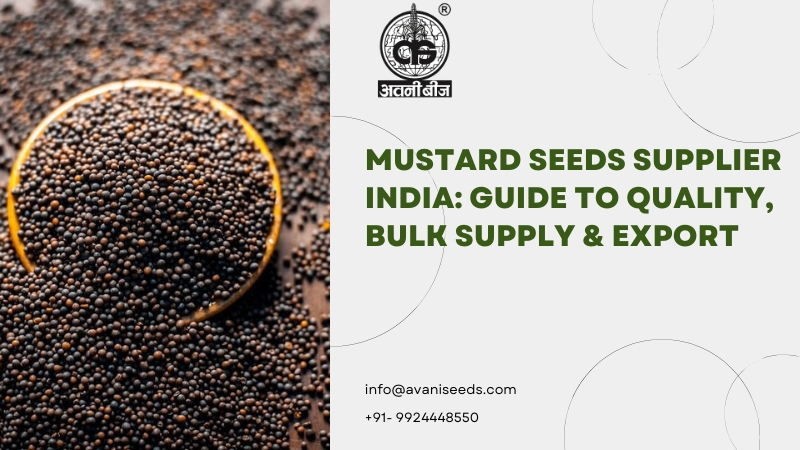
India has earned a strong reputation as one of the world’s largest producers and exporters of mustard seeds.Its favorable climate, experienced farmers, and well-developed agricultural supply chain help deliver consistent quality for domestic and international markets.Today, Indian mustard seeds are widely used in food processing, spice blends, edible oil production, pickles, sauces, and retail packaging.
For businesses sourcing in bulk, selecting the right Mustard Seeds Supplier India is about more than price.Quality, purity, grading, certifications, packaging, and dependable logistics all influence long-term value.This guide explains the different mustard seed varieties, production regions, quality benchmarks, export practices, and practical buying considerations.Whether you are a wholesaler, importer, distributor, or food manufacturer, understanding these factors will help you make informed purchasing decisions.
Why India is a Leading Mustard Seeds Supplier
India is among the world’s foremost producers of mustard seeds, supported by a long agricultural tradition and favorable growing conditions. The country’s fertile plains, varied climate, and experienced farming communities enable consistent production across multiple regions. This dependable supply allows businesses to source mustard seeds throughout much of the year.Mustard is cultivated primarily as a winter crop. Farmers follow established cultivation methods while increasingly adopting modern harvesting, cleaning, and grading techniques. These improvements help maintain seed quality, reduce impurities, and meet the expectations of domestic buyers and export markets.
Indian suppliers typically offer several grades based on purity, size, moisture content, and intended use. Export-quality mustard seeds undergo additional cleaning and sorting before packing, making them suitable for food manufacturers, spice processors, edible oil producers, and international distributors.A reliable supplier also focuses on proper storage. Clean warehouses, controlled moisture levels, and careful handling help preserve freshness and reduce the risk of contamination during transportation.
India’s strategic location further supports global trade. Well-connected ports, established logistics networks, and experience in agricultural exports enable suppliers to serve customers across Asia, Europe, the Middle East, North America, and Africa with competitive lead times.Businesses looking for long-term sourcing partners often value suppliers that combine consistent quality with transparent communication, documented quality checks, and dependable delivery schedules.
Major Mustard-Producing States
Mustard cultivation is concentrated in several agricultural regions, each contributing significantly to India’s overall production.Rajasthan leads national production due to its large cultivation area and suitable climate. Haryana and Uttar Pradesh are also major contributors, producing high-quality seeds for both domestic consumption and export.
Other important producing states include Madhya Pradesh, Gujarat, and parts of Punjab, where farmers continue to improve cultivation practices through better seed selection and farm management.Regional differences in soil, rainfall, and climate can influence seed size, oil content, and overall quality. Reliable suppliers work closely with farmers across these regions to maintain consistent grading standards regardless of origin.
Many exporters establish procurement networks directly within farming communities. This approach improves traceability, supports quality control, and ensures a stable supply for buyers throughout the year.
Global Demand for Indian Mustard Seeds
Demand for Indian mustard seeds continues to grow as food manufacturers, spice companies, and edible oil producers seek dependable raw materials with consistent quality.Countries across the Middle East, Europe, North America, Southeast Asia, and Africa import Indian mustard seeds for applications including spice blends, condiments, pickles, sauces, bakery products, and mustard oil production.
International buyers often prioritize suppliers that provide machine-cleaned products, export-grade packaging, documented quality testing, and compliance with applicable food safety requirements.As global demand increases, Indian suppliers are investing in improved processing facilities, advanced cleaning equipment, and stronger quality management systems. These developments help businesses source mustard seeds that meet international expectations while supporting efficient and reliable global supply chains.
Types of Mustard Seeds Available in India
India produces several varieties of mustard seeds to meet the requirements of different industries. Each type has distinct characteristics in terms of colour, flavour, oil content, and culinary use. Understanding these differences helps buyers choose the right product for food manufacturing, spice processing, edible oil production, or export.Suppliers generally classify mustard seeds based on variety, purity, size, and intended application. Export-grade seeds undergo cleaning, grading, and quality inspection before packaging to ensure consistency.
When purchasing in bulk, buyers should request product specifications that include:
- Purity percentage
- Moisture content
- Foreign matter percentage
These quality parameters directly affect storage life, processing efficiency, and product performance.Well-established suppliers also provide customized packaging options, allowing businesses to receive products suitable for retail, wholesale, or industrial use.Choosing the correct mustard seed variety ensures better flavour, improved processing results, and higher customer satisfaction.
Yellow Mustard Seeds
Yellow mustard seeds are known for their light colour, mild flavour, and balanced pungency. Compared to black or brown varieties, they are less spicy, making them suitable for products that require a gentle mustard taste.
They are commonly used in:
- Pickles
- Salad dressings
- Sauces
- Spice blends
- Processed foods
- Table mustard production
The seeds contain valuable nutrients, including protein, dietary fibre, and essential minerals. They are also widely used in commercial food manufacturing because of their consistent flavour profile.Export-quality yellow mustard seeds are machine-cleaned to remove dust, broken seeds, stones, and other impurities. Suppliers also monitor moisture levels carefully, helping preserve freshness during long-distance transportation.
For international buyers, yellow mustard seeds remain one of the most requested varieties because they adapt well to different food applications while maintaining uniform quality.
Brown and Black Mustard Seeds
Brown and black mustard seeds offer a stronger aroma and sharper flavour than yellow varieties. Their higher pungency makes them a preferred ingredient in traditional Indian cooking and many international spice blends.
Brown mustard seeds are frequently used in:
- Curry powders
- Masala blends
- Pickling
- Spice processing
- Condiments
Black mustard seeds are valued for:
- Tempering (tadka)
- Regional Indian recipes
- Specialty spice products
- Premium seasoning blends
These varieties generally contain higher oil content, making them suitable for mustard oil extraction as well.Professional suppliers grade brown and black mustard seeds according to size, colour, cleanliness, and purity. Modern optical sorting systems further improve consistency before export packaging.Reliable exporters ensure every shipment meets agreed quality specifications, reducing the risk of product rejection and supporting long-term business relationships.
How to Choose a Reliable Mustard Seeds Supplier
Selecting a supplier is one of the most important decisions when purchasing agricultural commodities. Price alone should never determine the choice. Product quality, supply consistency, documentation, and customer support all contribute to successful long-term sourcing.A dependable supplier maintains close relationships with farmers, invests in modern processing equipment, and follows established quality management practices.
Before placing a bulk order, buyers should evaluate several factors, including production capacity, quality assurance procedures, export experience, and responsiveness to customer requirements.Experienced suppliers also provide complete product information, helping buyers understand exactly what they are purchasing.Clear communication throughout the procurement process reduces delays and builds trust between supplier and customer.
Quality Standards Every Buyer Should Check
Quality assurance begins at the procurement stage and continues through cleaning, grading, storage, packaging, and shipment.
Important quality indicators include:
- High purity levels
- Controlled moisture content
- Uniform seed size
- Low foreign matter
- Minimal damaged seeds
- Proper grading
- Food-safe handling
Many professional suppliers follow internationally recognised food safety systems and maintain certifications relevant to export markets.Depending on customer requirements, buyers may also request laboratory reports covering moisture, purity, microbiological parameters, or pesticide residue testing.Consistent quality documentation provides confidence and helps businesses meet import regulations in different countries.
Packaging and Export Capabilities
Packaging plays a major role in preserving seed quality throughout storage and transportation.
Reliable suppliers offer packaging suitable for:
- Bulk industrial buyers
- Retail brands
- Importers
- Food manufacturers
- Wholesale distributors
Common packaging options include woven polypropylene bags, laminated bags, and customised packaging with private labelling where required.Strong packaging protects the seeds from moisture, contamination, and physical damage during shipping.
Export-ready suppliers also assist with documentation such as commercial invoices, packing lists, certificates of origin, phytosanitary certificates (where applicable), and shipping documentation required by importing countries.An experienced exporter coordinates closely with freight partners to ensure timely dispatch and efficient international delivery.
Industries That Use Mustard Seeds
Mustard seeds serve a wide range of industries beyond household cooking. Their versatility makes them an important agricultural commodity in both domestic and international markets.Food manufacturers appreciate mustard seeds for their distinctive flavour and functional properties. Oil processors value their high oil content, while spice companies rely on consistent quality for seasoning blends.
Industrial buyers typically seek suppliers capable of delivering large volumes without compromising quality.Reliable procurement helps maintain uninterrupted production schedules and consistent finished products.Businesses also benefit from suppliers that can customize grading, packaging, and shipment quantities according to specific manufacturing needs.
Food Processing Industry
The food processing sector is one of the largest consumers of mustard seeds.
They are widely used in:
- Ready-to-eat foods
- Sauces
- Salad dressings
- Pickles
- Marinades
- Condiments
- Spice blends
- Bakery products
Manufacturers prefer suppliers that deliver clean, uniform seeds with stable flavour characteristics. Consistency helps maintain product quality across multiple production batches. Machine-cleaned mustard seeds also improve processing efficiency by reducing waste and equipment contamination.For companies serving international markets, sourcing export-quality raw materials supports compliance with food safety requirements and customer expectations.
Oil Extraction and Spice Manufacturing
Mustard seeds are an important raw material for edible oil production. Their natural oil content makes them suitable for extracting mustard oil used in cooking and food manufacturing.
The spice industry also depends heavily on mustard seeds for:
- Ground mustard powder
- Curry blends
- Regional spice mixes
- Seasoning products
- Industrial spice formulations
High-quality seeds improve flavour, aroma, colour consistency, and production efficiency. Working with an experienced Mustard Seeds Supplier India helps manufacturers receive dependable supplies that support continuous production while maintaining consistent quality standards.
Buying Mustard Seeds in Bulk
Purchasing mustard seeds in bulk requires more than comparing prices. A successful sourcing decision depends on quality consistency, supplier reliability, packaging standards, and delivery performance. Businesses that evaluate these factors carefully are better positioned to maintain uninterrupted production and build long-term supply partnerships.
Before confirming an order, request a detailed product specification sheet. This should include purity level, moisture content, seed size, colour, foreign matter percentage, crop year, and available packaging options. Clear specifications reduce misunderstandings and ensure the product meets your intended application.It is also helpful to ask for product samples before placing large orders. Testing the seeds for flavour, appearance, cleanliness, and processing performance provides confidence in the supplier’s capabilities.
When comparing suppliers, consider:
- Product quality and grading consistency
- Export experience and documentation support
- Production capacity and delivery timelines
A supplier with transparent communication, reliable logistics, and established quality control systems is more likely to support long-term business growth than one offering only the lowest price.
Export Documentation and Logistics
Efficient logistics are essential for maintaining product quality and ensuring on-time deliveries. Experienced exporters understand the documentation required for international trade and help buyers complete the shipping process smoothly.
Typical export documentation may include:
- Commercial Invoice
- Packing List
- Certificate of Origin
- Phytosanitary Certificate (when required)
- Bill of Lading or Air Waybill
- Quality Inspection Reports
Proper packaging also plays an important role in protecting mustard seeds during storage and transit. Moisture-resistant bags, secure palletisation, and careful container loading reduce the risk of contamination or damage.A supplier with an established export network can coordinate shipping efficiently while keeping buyers informed throughout the process. Reliable logistics improve supply chain stability and strengthen long-term business relationships.
Conclusion
India continues to be one of the world’s most trusted sources of premium mustard seeds, supplying domestic businesses and international buyers with consistent quality and dependable availability.Choosing the right Mustard Seeds Supplier India involves evaluating product quality, sourcing practices, processing standards, certifications, packaging, and export capabilities rather than focusing only on price.
A supplier that prioritises transparency, quality control, and timely delivery helps businesses maintain efficient operations and meet customer expectations across different markets.Whether you are sourcing mustard seeds for food processing, spice manufacturing, edible oil production, or global distribution, working with a trusted partner contributes to reliable procurement and long-term success.If you are looking for a dependable source of premium Indian mustard seeds, avaniseeds offers a customer-focused approach with attention to quality, consistency, and reliable supply for domestic and international markets.