
A seed packet does not tell you much on its own. The real story is everything that happens before it – years of field trials, a breeding program that survived a few bad monsoons, and a quality team that rejects a batch rather than ship something they are not sure of. That is the part most buyers never see when they search for a corn seeds exporter India, and it is exactly the part that decides whether their harvest succeeds or disappoints.
This guide looks past the farm gate to show how established Indian corn seed companies actually operate: how hybrids are developed, what separates a real Maize Seed Manufacturer India from a reseller, and what international growers, importers, and cooperatives should expect from a supplier they are trusting with an entire planting season.
Why Global Growers Are Looking to India for Corn Seed?
Maize is grown across a wide range of Indian states, from Karnataka and Andhra Pradesh to Madhya Pradesh, Bihar, and Rajasthan, each with its own soil type, rainfall pattern, and pest pressure. That diversity has forced Indian breeding programs to develop hybrids that adapt well, which is precisely the trait overseas growers need when a variety has to perform in an unfamiliar climate.
Search intent around Indian corn seed companies generally falls into a few clear groups:
- Overseas importers and trading houses building a dependable, certified sourcing pipeline
- Cooperatives and large farms wanting bulk hybrid seed backed by real yield data
- Distributors evaluating a long-term partner among the many Maize Seeds Exporter in India options available
Whatever the group, the underlying question is the same: can this company back up its claims with evidence, and will supply stay consistent season after season, not just for the first order.
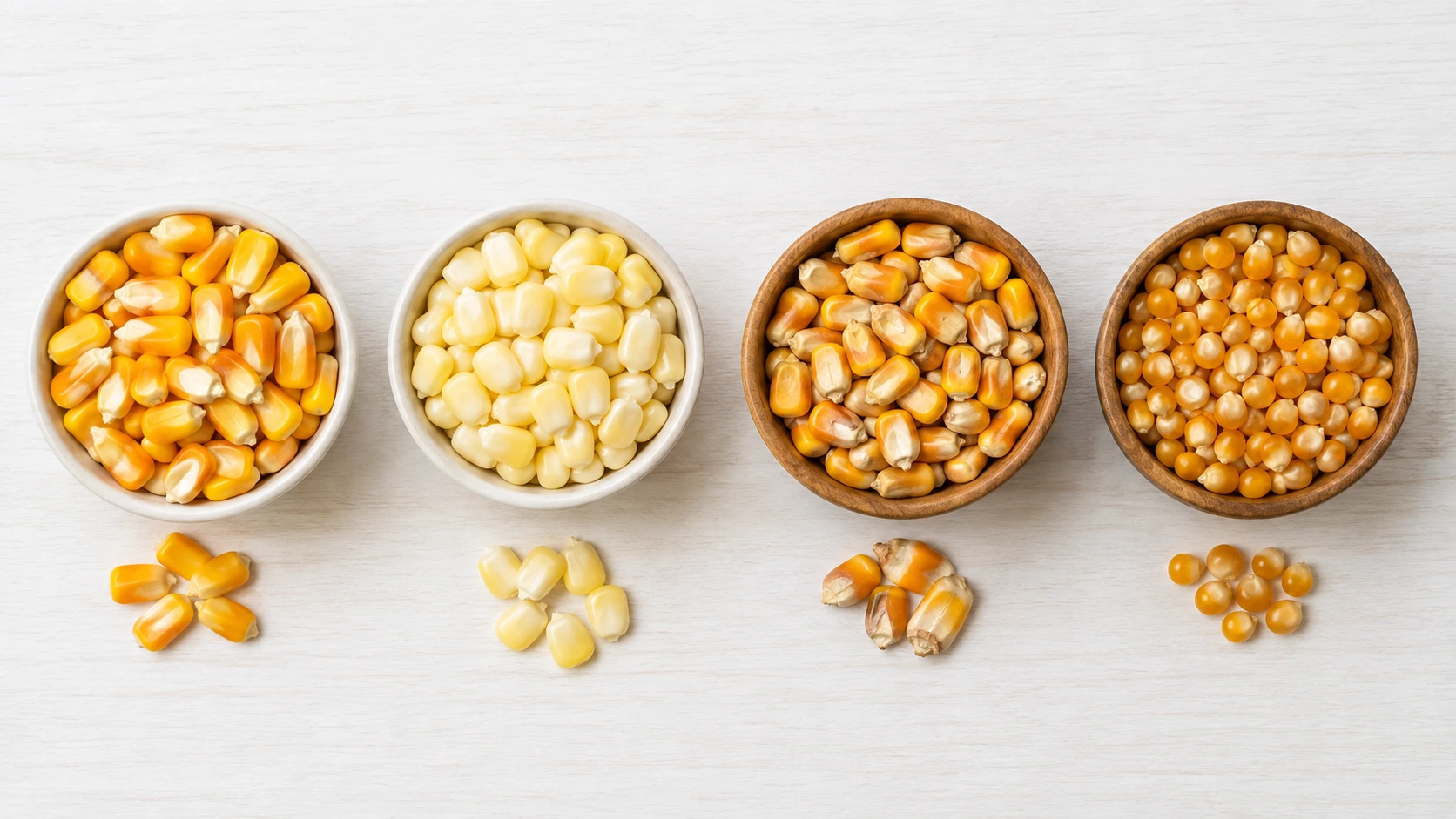
Types of Corn Seed Indian Exporters Typically Supply
Before contacting any Corn Seeds Supplier India, it helps to know the common categories, since soil, climate, and intended use all affect which one fits your operation.
| Seed Type | Best Suited For | Typical Maturity |
| Hybrid Field Corn | Large-scale grain and feed production | 90-110 days |
| Sweet Corn Hybrids | Fresh consumption, food processing | 65-80 days |
| Fodder Maize | Livestock and dairy feed programs | 55-70 days |
| Popcorn Hybrids | Snack food processing industries | 85-100 days |
A supplier worth working with will ask about your growing conditions before recommending a variety, rather than pushing whatever is easiest for them to move.
The Case for Hybrid Over Traditional Seed
Across commercial maize farming worldwide, hybrid seed has become the standard, and India’s push toward High Yield Corn Seeds India programs reflects that same shift. Compared with open-pollinated or traditional desi varieties, hybrids generally deliver:
- Higher and more consistent grain yield per acre
- Stronger natural resistance to common pests and stalk diseases
- Tighter, more predictable maturity windows for easier harvest planning
- Sturdier stalks that hold up better in wind and heavy rain
For a deeper look at the agronomic and cost differences, our comparison of hybrid versus traditional maize seeds is worth reading, along with our guide on choosing the right corn seed for your soil and climate before you place an order.
A Practical Checklist Before You Commit to a Supplier
Marketing claims are easy to make and hard to verify from a distance. Use this checklist during due diligence, before any purchase order is signed.
| Evaluation Point | Why It Matters |
| Germination rate documentation | Confirms seed viability before shipment |
| Seed testing lab reports | Independent proof of purity and seed health |
| Export licensing and phytosanitary certificates | Required for legal, smooth customs clearance |
| Field trial or research history | Confirms the hybrid has been validated, not just sourced |
| Packaging and moisture control | Protects germination quality over long transit |
Skipping this step is how buyers end up discovering a quality problem only after the seed is already in the ground, when it is too late to do anything about it.
What Happens Behind the Scenes During Export?
Once an order is confirmed, a responsible exporter moves through a fairly consistent sequence: seed lots are tested and certified, phytosanitary documentation and a certificate of origin are prepared, packaging is selected to control humidity for the specific shipping route, and lot numbers are recorded so every bag can be traced back to its original trial or production batch if a question ever arises later.
Timing matters just as much as paperwork. Corn seed is a living product, and germination can decline if it sits too long in a humid container. Experienced exporters plan shipping schedules around the buyer’s local sowing calendar rather than their own production convenience, and they give realistic lead times instead of promising unrealistic turnarounds just to win the order. Requesting a small sample shipment before committing to a full container is a normal, reasonable step that most established Indian corn seed companies will support without pushback.