

A mustard crop can look perfect in December and still lose a big part of its yield by February. The usual reasons are three: stem rot, rust and frost. All three strike at the stage when the crop is flowering and filling pods, which is exactly when you can least afford a loss.
The good news is that most of the damage can be reduced with the right seed, timely sowing and a few simple field habits. This is also why choosing a reliable mustard seeds supplier matters. Seed that is bred for disease and cold tolerance gives you a head start before the first irrigation, and a good supplier will tell you clearly what each variety can and cannot handle.
In this guide, we explain how to spot each problem, why it happens, and what you can do about it in simple steps.
Why These Three Problems Hurt Mustard So Much?
Mustard is a cool-season rabi crop. It grows well in winter, but cool, damp and foggy weather is also what disease fungi enjoy. Cold waves, on the other hand, can directly damage flowers and young pods.
Here is what is at stake:
- Lower seed yield: Fewer filled pods and lighter seed
- Lower oil content: A direct loss for farmers selling to oil mills
- Poor seed quality: Shrivelled or discoloured seed fetches a lower price
- Higher cost: Late sprays and replanting add to your expenses
Stem Rot in Mustard (Sclerotinia Rot)
Stem rot is caused by a fungus called Sclerotinia sclerotiorum. Research from ICAR-DRMR, Bharatpur, notes that it can cause serious yield losses and also reduces oil content and quality. It is one of the most feared mustard diseases for this reason.
Symptoms to Look For
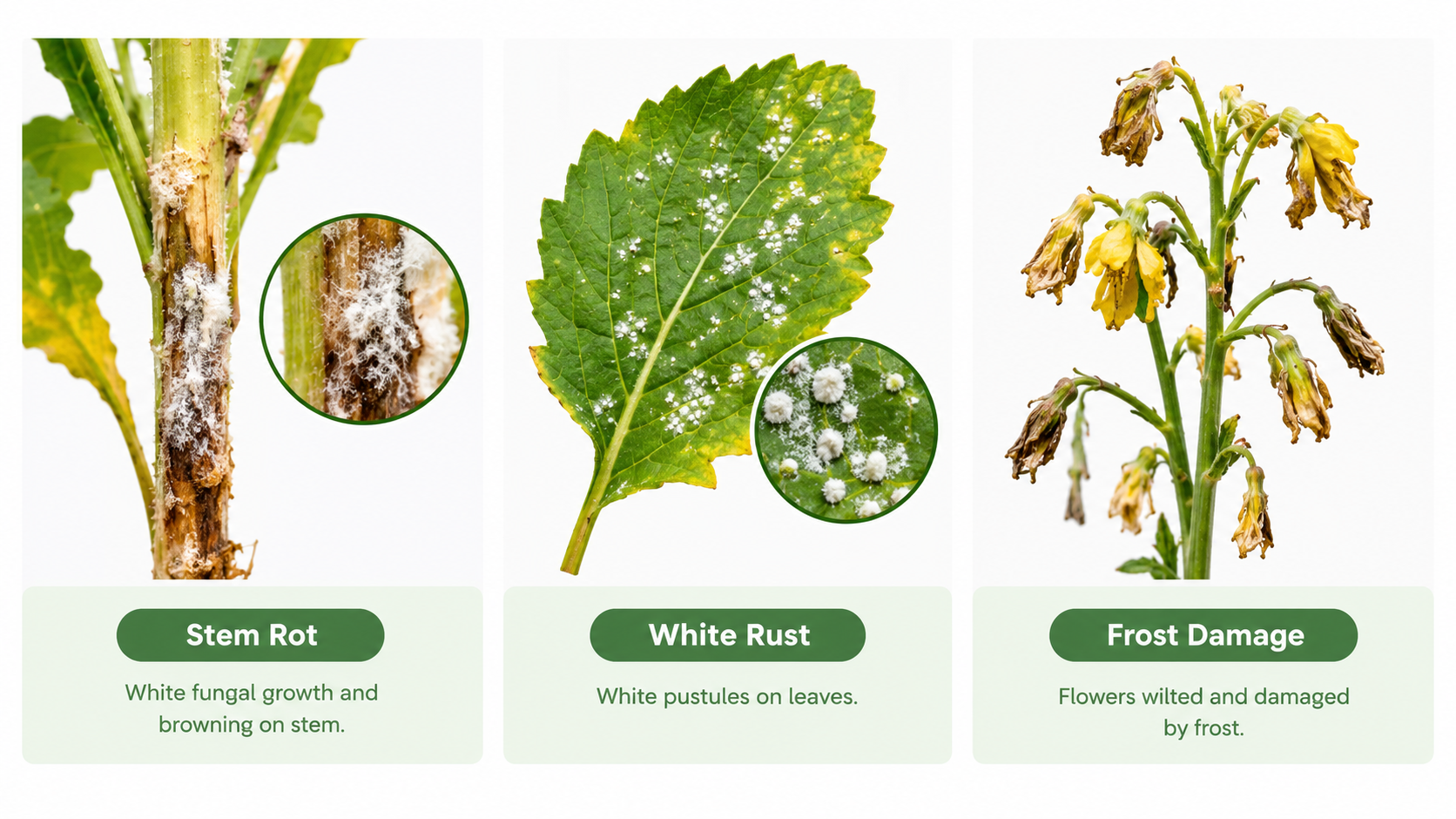
- Pale, water-soaked patches on the stem, usually near branches
- White, cotton-like fungal growth on the stem in humid weather
- Stems that turn bleached or straw-coloured and break easily
- Hard black lumps (sclerotia) inside the stem when you split it open
- Plants that ripen early and give shrivelled seed
Why It Spreads
The fungus survives in the soil as black resting bodies called sclerotia. It has a very wide host range, so rotating crops alone gives only limited help. The disease spreads more when:
- The weather is cool, humid and cloudy around the flowering stage, roughly 60 to 70 days after sowing
- The crop is too dense and the canopy stays damp
- The field is over-irrigated, especially around flowering
- Infected stubble from the last crop is left in the field
How to Manage It
- Avoid very dense sowing, so air can move through the crop
- Keep irrigation balanced and avoid watering heavily at flowering
- Remove and destroy infected plants and crop residue
- Use resistant or tolerant varieties wherever available
- Where the disease is a known problem, ICAR research has found that a foliar spray of carbendazim at full bloom reduces the disease. Follow the label and your local KVK or agriculture officer’s advice.
Rust in Mustard (White Rust)
When farmers say “rust” in mustard, they usually mean white rust, caused by the fungus Albugo candida. It shows up in cool, humid weather and often appears together with downy mildew.
Symptoms to Look For
- White to cream-coloured raised pustules on the underside of leaves
- Yellow patches on the upper side of the same leaves
- Swollen, twisted flower stalks, often called “stag-head” growth, which fail to set normal pods
How to Manage It
- Choose resistant varieties and certified seed
- Treat seed with a recommended fungicide before sowing
- Sow at the recommended time for your region
- Control weeds, which can hold the disease
- Destroy badly infected plants and residue
- If you must spray, use the fungicide and dose advised by your local agriculture office
Frost Damage in Mustard
Unlike the first two, frost is not a disease. It is a weather injury. Mustard is most sensitive during flowering and pod filling. A sudden cold wave or frost at this stage can make flowers drop, leave pods empty or poorly filled, and reduce both yield and oil content.
Signs of Frost Damage
- Flowers and young pods turn pale, dry up and fall
- Pods look flat, with few or shrivelled seeds
- Leaves and tender shoots look scorched or water-soaked after a cold night
How to Reduce the Risk
- Sow in the recommended window, so the crop does not flower during the coldest weeks
- Give a light irrigation when a cold wave is forecast, because moist soil holds heat better
- Use smoke from burning crop waste or dry grass on the windward side of the field on frosty nights
- Pick varieties with proven cold tolerance for your area
- Ask your local KVK about recommended sprays for frost protection before using any
Stem Rot vs Rust vs Frost: Quick Comparison
| Problem | Cause | Main signs | Higher-risk period | Key prevention |
|---|---|---|---|---|
| Stem rot | Fungus (Sclerotinia sclerotiorum) | White fungal growth, bleached stems, black sclerotia inside | Flowering, in cool humid weather | Balanced irrigation, resistant seed, avoid dense crop |
| White rust | Fungus (Albugo candida) | White pustules on leaves, stag-head flower stalks | Cool, humid, cloudy weather | Resistant varieties, seed treatment, timely sowing |
| Frost | Cold wave or freezing night | Dropped flowers, empty or shrivelled pods | Flowering and pod filling | Timely sowing, light irrigation, tolerant varieties |
A Simple Crop Protection Calendar
| Crop stage | What to do | What it prevents |
|---|---|---|
| Before sowing | Treat seed, clear old residue, pick resistant seed | Early disease and carry-over infection |
| Sowing | Sow on time at the right spacing | Frost at flowering, dense canopy |
| Vegetative growth | Control weeds, check leaves weekly | White rust spread |
| Flowering | Avoid heavy irrigation, scout for white fungal growth | Stem rot |
| Pod filling | Watch weather alerts, irrigate lightly before a cold wave | Frost damage |
How Resistant Varieties Help
No variety is a complete shield, and good field practice still matters. But resistant varieties lower the risk and the number of emergency sprays you need.
Our research team has developed two hybrid mustard varieties bred for resistance to stem rot, rust and frost:
| Feature | AVANI-45 | AVANI-90 |
|---|---|---|
| Maturity | 125 to 130 days | 120 to 125 days |
| Plant height | 160 to 180 cm | 170 to 185 cm |
| Branches | 6 to 7 productive branches | 7 to 8 primary branches |
| Seed | Round, bold and black | Round, bold and black |
| Oil content | 41 to 42% | 42 to 45% |
| Special trait | Non-shattering at maturity | Higher pod density |
If you are still choosing between types, our post on hybrid vs traditional mustard seeds compares the two options in more detail.
What to Do If You Already See Symptoms?
Act early. Walk the field in the morning and check stems, leaves and flower stalks in several spots, not just the field edge. If you find stem rot or white rust, remove the worst plants, avoid watering until the canopy dries, and ask your local KVK or agriculture officer which spray suits your stage and region. Do not mix chemicals on your own.
For frost, the work happens before the cold night, not after it. Keep an eye on weather alerts during flowering and prepare for a light irrigation or smoke in advance.