
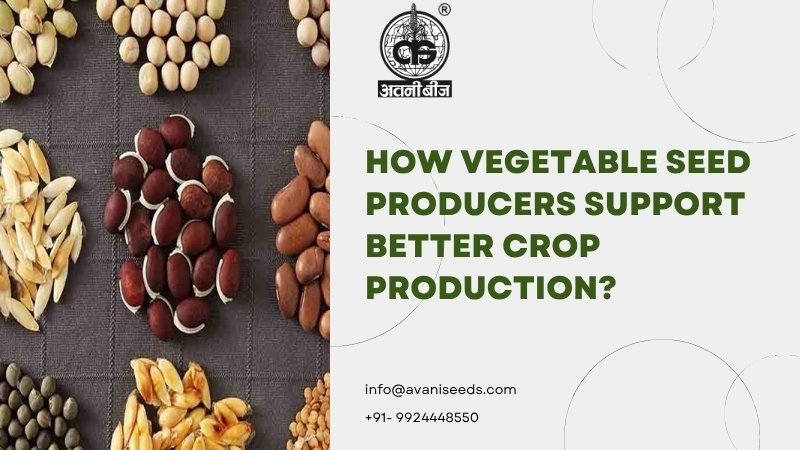
Vegetable cultivation depends on several important factors, including soil conditions, climate, irrigation, crop management, and most importantly, the quality of planting material. High-quality seeds can provide a strong starting point for farmers looking to establish healthy and productive vegetable crops.
A reliable Vegetable Seeds Producer Company In India plays an important role in developing, producing, processing, and supplying seeds that meet the requirements of different farming conditions. Since India has diverse agricultural climates and growing regions, vegetable seed producers need to consider crop characteristics, local conditions, and farmer requirements when developing and supplying seed varieties.
From germination and early plant establishment to crop uniformity and harvest quality, seed selection can influence several stages of vegetable production.
Factors That Influence Vegetable Seed Quality
Seed quality is determined by several characteristics rather than a single factor. Farmers should consider the following before selecting a seed variety.
1. Germination Quality
Germination indicates the ability of seeds to produce seedlings under suitable conditions.
Good germination can help farmers achieve a more uniform crop stand. However, actual field emergence can also depend on:
- Soil temperature
- Moisture
- Sowing depth
- Soil condition
- Seedbed preparation
- Crop management
Therefore, farmers should follow the recommended sowing conditions for the selected variety.
2. Physical Purity
Physical purity refers to the presence of the intended seed without unwanted materials or other seed types.
Proper cleaning and grading during seed processing can help maintain the required physical quality of a seed lot.
3. Genetic or Varietal Purity
Maintaining the identity of a variety is important for achieving its expected characteristics.
Seed production programmes use appropriate practices to minimise unwanted mixing and maintain varietal identity.
This can be particularly important when farmers require specific characteristics such as:
- Fruit shape
- Fruit colour
- Maturity
- Plant growth
- Size
- Market appearance
4. Seed Moisture
Moisture content can influence seed storage stability.
Excess moisture under unsuitable storage conditions may contribute to deterioration and reduced seed quality.
Proper processing, packaging, and storage are therefore important parts of professional seed handling.
Hybrid and Open-Pollinated Vegetable Seeds
Vegetable seeds can be broadly available in different types, including hybrid and open-pollinated varieties.
Hybrid Seeds
Hybrid seeds are produced by crossing selected parent lines to combine particular characteristics.
Depending on the crop and variety, hybrids may be developed for characteristics such as:
- Uniformity
- Vigorous growth
- Desired fruit characteristics
- Maturity
- Disease resistance or tolerance where applicable
Farmers should follow the specific recommendations provided for each hybrid.
Open-Pollinated Varieties
Open-pollinated varieties are maintained through controlled pollination practices that preserve their characteristic traits.
Their performance depends on the variety and growing conditions.
Farmers should choose between available seed types according to their crop objectives and cultivation system.
How Farmers Can Evaluate a Seed Producer?
Before purchasing vegetable seeds, farmers can evaluate the producer using several criteria.
Check Product Information
Review the crop, variety, seed type, sowing recommendations, and other information provided on the packaging.
Review Quality Information
Look for relevant information regarding germination, purity, lot identification, and applicable quality standards.
Consider Product Availability
For commercial farming, consistent seed availability can be important when planning cultivation across multiple seasons.
Evaluate Packaging
Good packaging can help protect seeds from environmental exposure during transportation and storage.
Check Cultivation Recommendations
Farmers should review recommended:
- Sowing time
- Seed rate
- Spacing
- Soil conditions
- Irrigation
- Fertilisation
- Crop-management practices
Common Mistakes When Selecting Vegetable Seeds
Farmers can avoid several common mistakes by evaluating seed information carefully.
Choosing Only on Price
Lower purchase cost does not necessarily mean the seed is the best option for a particular crop or growing condition.
Ignoring the Growing Season
A variety should be selected according to the recommended season and environmental conditions.
Not Checking the Packaging
Farmers should review the seed label, lot information, validity details, and cultivation recommendations before purchase.
Selecting Without Considering the Market
A variety should ideally match the requirements of the intended market.
Improper Storage After Purchase
Seeds should be stored according to the producer’s recommendations until they are planted.
Preparing for Vegetable Seed Sowing
Proper preparation can help create favourable conditions for seed establishment.
Farmers should consider:
- Soil preparation
- Soil moisture
- Sowing depth
- Seed spacing
- Temperature
- Irrigation
- Crop-specific recommendations
Different vegetable crops require different sowing practices, so farmers should follow the recommendations applicable to the selected variety.
Seed Rate and Spacing
Seed rate and spacing can influence crop establishment and plant development.
Excessive plant density may increase competition for:
- Water
- Nutrients
- Light
- Growing space
On the other hand, very wide spacing can reduce the efficient use of available land.
The recommended seed rate and spacing depend on the crop, variety, cultivation method, and local conditions.
Vegetable Seed Selection for Different Farming Systems
Vegetable cultivation can take place under different production systems.
Open-Field Cultivation
Farmers growing vegetables in open fields need to consider local climate, soil, irrigation, and seasonal conditions.
Protected Cultivation
Greenhouses, polyhouses, and other protected structures can provide more controlled growing conditions. Variety selection should match the specific protected cultivation system.
Commercial Farming
Commercial growers often place additional importance on:
- Uniformity
- Harvest period
- Market preference
- Yield potential
- Fruit quality
- Transport requirements
The appropriate seed variety should be selected according to the intended production and marketing strategy.
Choosing a Vegetable Seeds Producer Company in India
Farmers and agricultural businesses should evaluate several factors when choosing a seed producer.
Product Range
Check whether the producer offers varieties suitable for the crops and seasons you cultivate.
Quality Information
Review available information about germination, purity, variety characteristics, and other applicable quality parameters.
Packaging
Proper packaging helps protect seeds during transportation and storage.
Technical Information
Clear cultivation recommendations can help farmers understand how a particular variety should be managed.
Supply Reliability
Consistent availability can be important for commercial growers who plan production around specific sowing windows.
Experience and Reputation
A producer with an established approach to seed production and quality management may provide greater confidence when evaluating seed options.
Frequently Asked Questions
How do I choose the right vegetable seeds?
Consider the crop, season, climate, soil, cultivation method, maturity requirements, market demand, and characteristics of the available varieties.
What is the difference between hybrid and open-pollinated seeds?
Hybrid seeds are produced by crossing selected parent lines to combine desired characteristics. Open-pollinated varieties are maintained through controlled pollination practices that preserve their characteristic traits.
How should vegetable seeds be stored?
Seeds should generally be kept in their recommended packaging and protected from excessive moisture, heat, and unsuitable environmental conditions. Always follow the storage instructions on the product packaging.
Why should farmers consider a reliable seed producer?
A reliable producer can provide properly processed and packaged seeds along with relevant product and cultivation information, helping farmers make more informed variety choices.
Can Avaniseed help with vegetable seed requirements?
Avaniseed can be considered by farmers and agricultural businesses exploring vegetable seed options. Buyers should discuss their crop, location, season, cultivation method, and market requirements before selecting a variety.
Looking for Vegetable Seeds in India?
Choosing the right seed variety can make an important difference in crop planning and establishment. Evaluate your crop, growing conditions, season, and market requirements before making a selection.
Connect with Avaniseed to explore vegetable seed options suited to your farming requirements.
Conclusion
The role of a Vegetable Seeds Producer Company In India extends from seed production to processing, quality management, packaging, storage, and distribution. These processes help maintain seed quality throughout the supply chain. For farmers, successful vegetable cultivation starts with selecting a variety appropriate for the crop, season, climate, soil, cultivation method, and target market. Proper seed storage, sowing, and crop management are equally important for achieving good field establishment.
By evaluating seed quality information and choosing varieties according to actual farming conditions, growers can make more informed decisions about their planting material. Avaniseed can be considered when exploring vegetable seed options in India and discussing requirements based on specific crops and cultivation conditions.