
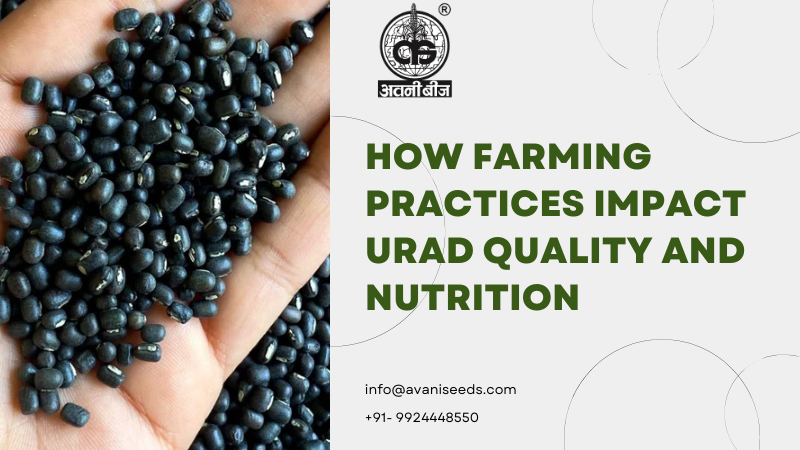
Urad dal, also known as black gram, is a staple pulse in Indian households and an important source of plant-based protein. From idli and dosa batter to dal preparations, the nutritional value of urad dal depends greatly on how the crop is grown. Modern agriculture has shown that urad farming practices and quality are closely linked, influencing not only yield but also grain size, protein content, and market value.
Understanding the impact of cultivation methods helps farmers, processors, and buyers make better decisions.
Importance of Quality Urad Cultivation in India
India is one of the largest producers and consumers of urad. With rising demand from domestic and export markets, consistent quality has become essential. High-quality urad fetches better prices and offers superior nutritional benefits.
Proper urad crop cultivation and yield management ensures:
- Uniform grain size
- Higher protein and mineral content
- Better cooking and fermentation quality
- Reduced post-harvest losses
Soil Preparation and Its Effect on Quality
Soil health plays a crucial role in urad production. Urad grows best in well-drained loamy soils with good organic matter.
Key practices include:
- Soil testing before sowing
- Balanced nutrient application
- Adequate organic manure or compost
Healthy soil supports better nutrient uptake, directly improving the nutritional value of urad dal.
Seed Selection: Foundation of Quality Yield
Choosing the right seeds is one of the most important decisions in urad cultivation. High-quality seeds ensure better germination, uniform growth, and resistance to diseases.
Farmers are increasingly relying on certified Urad Seeds Suppliers in India who provide:
- High-germination seed varieties
- Disease-resistant hybrids
- Climate-adapted seeds
Working with the Best Agriculture Seed Suppliers in India helps farmers achieve consistent crop performance and superior grain quality.
Sowing Practices and Plant Density
Timely sowing is essential for optimal yield. Delayed or early sowing can affect flowering and pod formation.
Recommended practices include:
- Proper spacing to avoid overcrowding
- Optimal sowing depth for strong root development
- Synchronised planting with monsoon patterns
Correct sowing practices enhance urad crop cultivation and yield while reducing plant stress.
Nutrient and Water Management
Although urad is a leguminous crop that fixes nitrogen, balanced nutrition is still required. Deficiency of micronutrients like zinc and iron can affect grain quality.
Best practices include:
- Seed treatment with biofertilizers
- Judicious use of phosphorus and potassium
- Controlled irrigation to avoid waterlogging
Efficient nutrient and water management improves urad farming practices and quality, resulting in nutritionally richer grains.
Pest and Disease Control
Pests such as pod borers and diseases like yellow mosaic virus can severely impact yield and grain quality. Integrated Pest Management (IPM) is recommended to maintain quality without harming soil health.
Using eco-friendly control measures:
- Preserves nutritional integrity
- Reduces chemical residues
- Improves market acceptance
Healthy crops lead to higher-grade produce and better consumer trust.
Harvesting and Post-Harvest Handling
Timely harvesting prevents shattering and quality loss. Post-harvest handling is equally important in preserving grain nutrition.
Good practices include:
- Harvesting at physiological maturity
- Proper drying to safe moisture levels
- Clean storage to prevent pest infestation
These steps ensure that the nutritional value of urad dal is retained until it reaches consumers.
Role of Quality Seed Suppliers in Improving Outcomes
Partnering with reliable Urad Seeds Suppliers in India enables farmers to access improved varieties that offer higher yield, better resistance, and superior nutritional traits.
The Best Agriculture Seed Suppliers in India also provide technical guidance on:
- Crop management
- Sowing techniques
- Disease prevention
This support strengthens the entire value chain, from farm to plate.
Conclusion
The quality and nutrition of urad dal are not accidental-they are the result of thoughtful farming decisions. From soil preparation and seed selection to harvesting and storage, every step influences urad farming practices and quality.
By adopting scientific cultivation methods and sourcing seeds from trusted Urad Seeds Suppliers in India, farmers can improve urad crop cultivation and yield while delivering higher nutritional value to consumers. As demand grows, investing in better farming practices ensures sustainable production and healthier food for India.
