
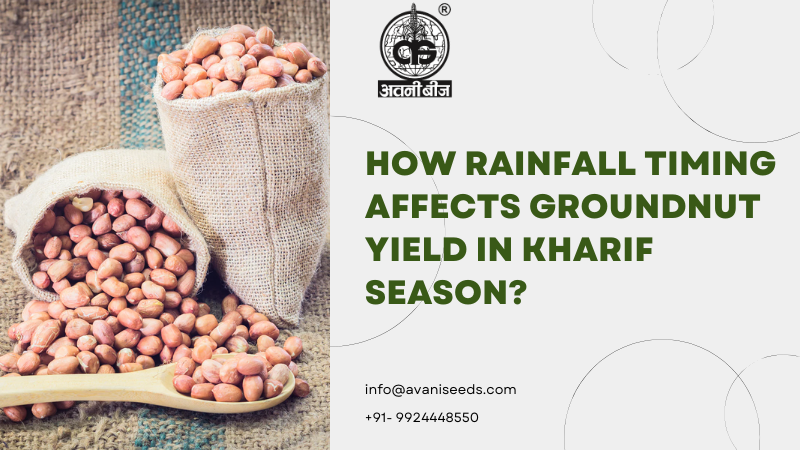
Groundnut is one of the most widely cultivated oilseed crops during the Kharif season in India. While seed quality, soil fertility, and crop management all play important roles in production, rainfall timing often has the greatest influence on final yield. A well-distributed monsoon can support healthy plant growth, while irregular rainfall may reduce productivity and affect crop quality.
Many farmers focus on total rainfall amounts, but understanding how rainfall affects groundnut yield is equally important. The timing, intensity, and distribution of rainfall during different crop growth stages can determine whether a season is highly profitable or disappointing.
In this blog, we will explore the relationship between rainfall and groundnut production, discuss the ideal rainfall for groundnut cultivation, and share practical tips for successful groundnut farming during monsoon conditions.
Why Rainfall Timing Matters in Groundnut Farming
Groundnut plants require moisture at specific growth stages. Too little rainfall can cause water stress, while excessive rainfall may lead to poor root development, fungal diseases, and reduced pod formation.
Proper rainfall timing helps:
- Improve seed germination
- Strengthen root growth
- Support flowering and pegging
- Enhance pod development
- Increase final yield and quality
This is why farmers should focus not only on rainfall quantity but also on its timing throughout the season.
How Rainfall Affects Groundnut Yield at Different Growth Stages
Understanding how rainfall affects groundnut yield becomes easier when we look at each growth stage individually.
Germination Stage:
The first few weeks after sowing are critical for crop establishment.
Benefits of Timely Rainfall:
- Ensures uniform germination
- Supports healthy seedling growth
- Improves root development
Problems Caused by Excess Rainfall:
- Waterlogging
- Seed rot
- Poor plant population
Farmers should use high-quality seeds from a trusted Groundnut Seeds Supplier India to improve germination success, especially during unpredictable monsoon conditions.
Vegetative Growth Stage
During early plant development, moderate rainfall encourages healthy leaf and stem growth.
Adequate Rainfall Helps:
- Increase photosynthesis
- Build plant strength
- Improve nutrient absorption
Excess Rainfall May Cause
- Nutrient leaching
- Yellowing of leaves
- Increased disease pressure
Balanced moisture during this stage creates a strong foundation for future pod production.
Flowering and Pegging Stage
This is one of the most important stages in groundnut cultivation.
Positive Effects of Proper Rainfall:
- Better flower formation
- Successful peg penetration into soil
- Increased pod-setting potential
Risks of Heavy Rainfall:
- Flower drop
- Reduced peg development
- Soil compaction
Many yield losses occur when rainfall becomes excessive during flowering.
Pod Development Stage
Once pods begin forming underground, consistent moisture becomes essential.
Ideal Conditions:
- Moderate rainfall
- Good soil aeration
- Proper drainage
Excessive Rainfall Can Lead To
- Pod rot
- Fungal infections
- Reduced kernel quality
This stage highlights why the ideal rainfall for groundnut cultivation involves balance rather than excessive moisture.
Ideal Rainfall for Groundnut Cultivation
Farmers often ask about the ideal rainfall for groundnut cultivation. While exact requirements vary depending on soil type and variety, groundnut generally performs best when rainfall is evenly distributed throughout the growing season.
Characteristics of Ideal Rainfall
- Regular rainfall during germination
- Moderate moisture during vegetative growth
- Balanced rainfall during flowering
- Limited waterlogging during pod development
Even distribution is usually more beneficial than heavy rainfall concentrated over a few days.
Fields with good drainage systems often perform better because they reduce water accumulation around the roots.
Common Monsoon Challenges in Groundnut Farming
Successful groundnut farming during monsoon requires preparation for weather-related challenges.
- Waterlogging
Groundnut roots require oxygen for healthy growth.
Excess standing water may:
- Damage roots
- Increase disease outbreaks
- Reduce pod formation
- Soil Erosion
Heavy rainfall can wash away:
- Topsoil
- Nutrients
- Organic matter
This directly affects crop productivity.
- Fungal Diseases
Moist conditions often encourage:
- Leaf spot diseases
- Stem rot
- Root infections
Timely monitoring is essential during rainy periods.
- Delayed Field Operations
Continuous rainfall may delay:
- Weeding
- Fertilizer application
- Pest management activities
These delays can negatively impact crop performance.
Groundnut Farming During Monsoon: Practical Management Tips
Farmers can minimize weather-related risks by following good agricultural practices.
Choose Quality Seeds
Always select certified seeds from a reliable Groundnut Seeds Supplier India to improve germination and crop uniformity.
Prepare Well-Drained Fields
Proper drainage helps:
- Prevent waterlogging
- Reduce root damage
- Improve soil aeration
Follow Timely Sowing
Planting at the beginning of favorable rainfall conditions helps crops establish strong roots before heavy monsoon activity.
Monitor Crop Health Regularly
Inspect fields for:
- Disease symptoms
- Pest attacks
- Nutrient deficiencies
Early intervention prevents major losses.
Maintain Soil Fertility
Balanced nutrition supports stronger plants that can better tolerate weather fluctuations.
These practices are essential for successful groundnut farming during monsoon conditions.
Why Seed Quality Matters During Uncertain Rainfall
Weather risks cannot always be controlled, but seed quality can significantly influence crop performance.
High-quality seeds often provide:
- Better germination rates
- Stronger root systems
- Improved stress tolerance
- Uniform crop establishment
Working with experienced Agriculture Seed Suppliers in India helps farmers access seed varieties designed for modern farming conditions and changing weather patterns.
Conclusion
Understanding how rainfall affects groundnut yield is essential for farmers who want to maximize productivity during the Kharif season. Groundnut crops respond strongly to rainfall timing, especially during germination, flowering, and pod development stages.
The ideal rainfall for groundnut cultivation is not simply about receiving more rain—it is about receiving moisture at the right time and in the right amount. Proper drainage, timely sowing, quality seed selection, and effective field management all contribute to better crop performance.